Machine learning at the edge: TinyML is getting big

Is it $61 billion and 38.4% CAGR by 2028 or $43 billion and 37.4% CAGR by 2027? Depends on which report outlining the growth of edge computing you choose to go by, but in the end it’s not that different.

What matters is that edge computing is booming. There is growing interest by vendors, and ample coverage, for good reason. …
Tiny ML: The Next Big Opportunity In Tech

Free white paper from ABI Research:

… TinyML aims to solve the issues of both cost and power efficiency by enabling data analytics performance on low-powered hardware with low processing power and small memory size, aided by software designed for small-sized inference workloads. It has the potential to revolutionize the future of the IoT.

Privacy and new functions will make TinyML big

By Stacey Higginbotham

Privacy and smart features that don’t depend on an app will likely drive the adoption of machine learning (ML) on constrained edge devices going forward. That was the message Zach Shelby, CEO of Edge Impulse, and I tried to convey when we sat on a virtual panel at the tinyML Summit this week. …

Machine Learning Is Giving Cancer Detection New Bionic Eyes

Machine learning analysis of images is being used to provide medical diagnosis. And portable solutions using vision at the edge provide solutions that efficient, lower cost, and more timely than clinical solutions. Professor Mohammed Zubair’s research is leading the way in detecting oral cancer. [Don’t miss Professor Zubair’s tinyML Talks on this topic too.]

TinyML Could Democratize AI Programming for IoT

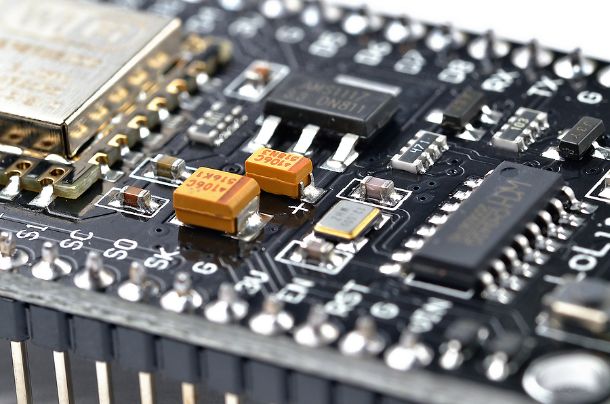
Upgrading microcontrollers with small, essentially self-contained neural networks enables organizations to deploy efficient AI capabilities for IoT without waiting for specialized AI chips.

How TinyML Makes Artificial Intelligence Ubiquitous

TinyML is the latest from the world of deep learning and artificial intelligence. It brings the capability to run machine learning models in a ubiquitous microcontroller – the smallest electronic chip present almost everywhere.

Can artificial intelligence give elephants a winning edge?

Open-source developers and tech giants created the world’s most advanced elephant tracking collars.

“Sara Olsson, a Swedish software engineer who has a passion for the natural world created a tinyML and IoT monitoring dashboard”.

Why tinyML is a giant opportunity right now

The world is about to get a whole lot smarter. As the new decade begins, we’re hearing predictions on everything from fully remote workforces to quantum computing. However, one emerging trend is scarcely mentioned on tech blogs – one that may be small in form but has the potential to be massive in implication. We’re talking about microcontrollers.

tinyML book written by Pete Warden and Daniel Situnayake of Google

Neural networks are getting smaller. Much smaller. The OK Google team, for example, has run machine learning models that are just 14 kilobytes in size—small enough to work on the digital signal processor in an Android phone. With this practical book, you’ll learn about TensorFlow Lite for Microcontrollers, a miniscule machine learning library that allows you to run machine learning algorithms on tiny hardware.

Stanford University Seminar

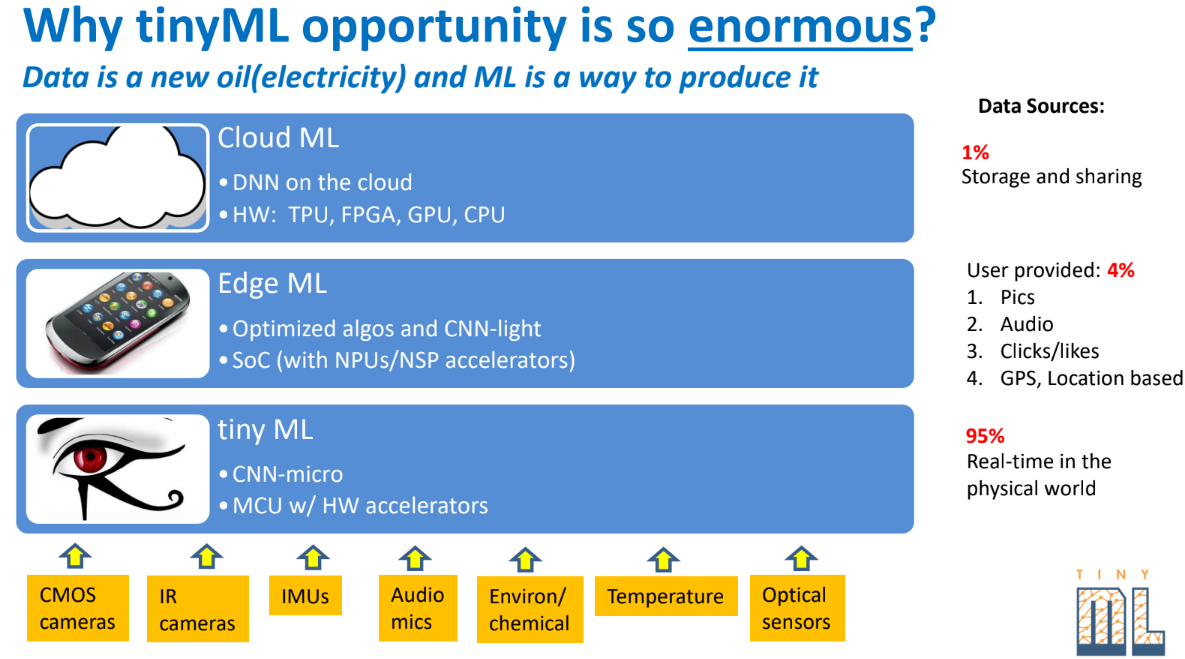
Evgeni Gousev of Qualcomm and Pete Warden of Google participated in a panel at Stanford University seminar “Current Status of tinyML and the Enormous Opportunities Ahead”.